Cooling & thermal management/ In focus
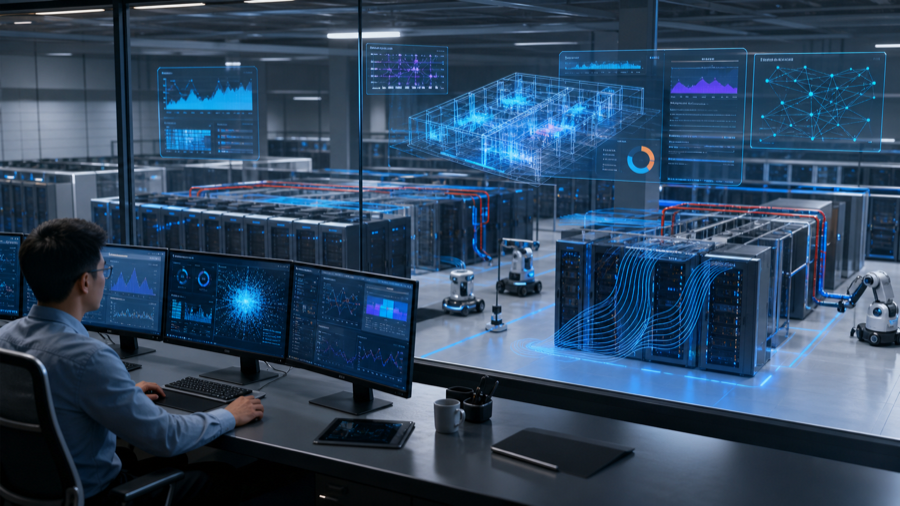
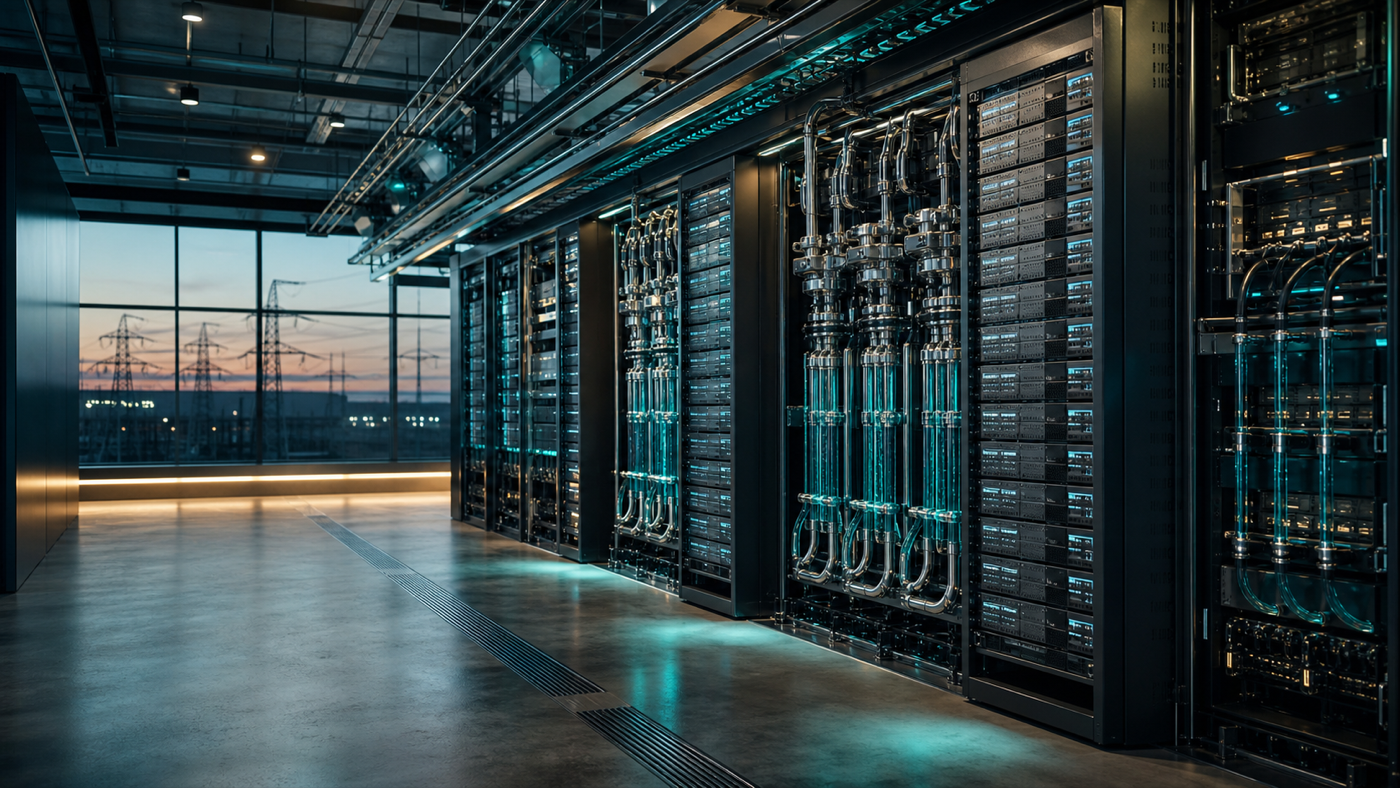
Waste-to- Energy -Coupled AI Data Centers : Cooling Efficiency and Grid Resilience
AI
Read the paper & insightAIDC RESEARCH
Computing Research Frontiers.In focus/ Research highlights
8 papers4 research areas
Cooling & thermal management/ In focus
AI
Read the paper & insightComputing & systems/ Related research
Leveraging continuous solar energy
AI & modeling/ Related research
Physical implementations of neural computation now extend far beyond silicon hardware, encompassing substrates such as memristive devices, photonic circuits, mechanical metamaterials, microfluidic networks, chemical reaction systems, and living neural tissue. By exploiting intrinsic physical processes such as charge transport, wave interference, elastic deformation, mass transport, and biochemical regulation, these substrates can realize neural inference and adaptation directly in matter. As silicon GPU- centered
READING NOTEStart with the research insight, then examine the methods, comparisons and conditions.
RESEARCH & PERSPECTIVES
Leave each paper with a question worth pursuing.
8 papers
Cooling & thermal management
01AI
AI
Computing & systems
02Leveraging continuous solar energy
Leveraging continuous solar energy
AI & modeling
03Physical implementations of neural computation now extend far beyond silicon hardware, encompassing substrates such as memristive devices, photonic circuits, mechanical metamaterials, microfluidic networks, chemical reaction systems, and living neural tissue. By exploiting intrinsic physical processes such as charge transport, wave interference, elastic deformation, mass transport, and biochemical regulation, these substrates can realize neural inference and adaptation directly in matter. As silicon GPU- centered
Physical implementations of neural computation now extend far beyond silicon hardware, encompassing substrates such as memristive devices, photonic circuits, mechanical metamaterials, microfluidic networks, chemical reaction systems, and living neural tissue. By exploiting intrinsic physical processes such as charge transport, wave interference, elastic deformation, mass transport, and biochemical regulation, these substrates can realize neural inference and adaptation directly in matter. As silicon GPU- centered
Compute–power coordination
04The rapid growth of AI
The rapid growth of AI
AI & modeling
05The generative artificial intelligence ( AI
The generative artificial intelligence ( AI
AI & modeling
06The rapid scaling of large language models (LLMs) exacerbates communication bottlenecks in AI
The rapid scaling of large language models (LLMs) exacerbates communication bottlenecks in AI
Compute–power coordination
07Data
Data
AI & modeling
08Artificial Intelligence is often discussed in France in terms of investment, compute capacity, regulation, employment, sovereignty, and education. These dimensions are usually treated separately. This viewpoint paper proposes a unified interpretation: France should be understood as a \emph{national AI
Artificial Intelligence is often discussed in France in terms of investment, compute capacity, regulation, employment, sovereignty, and education. These dimensions are usually treated separately. This viewpoint paper proposes a unified interpretation: France should be understood as a \emph{national AI
Try a shorter keyword or clear the topic filter.