bupt.ai Research & perspectives

AIDC RESEARCH

Computing Research Frontiers.

Research connecting computing, power and thermal management

DAILY RESEARCH EDITIONCooling · Compute–power coordination · AI infrastructure

In focus/ Research highlights

28 papers5 research areas

Cooling & thermal management/ In focus

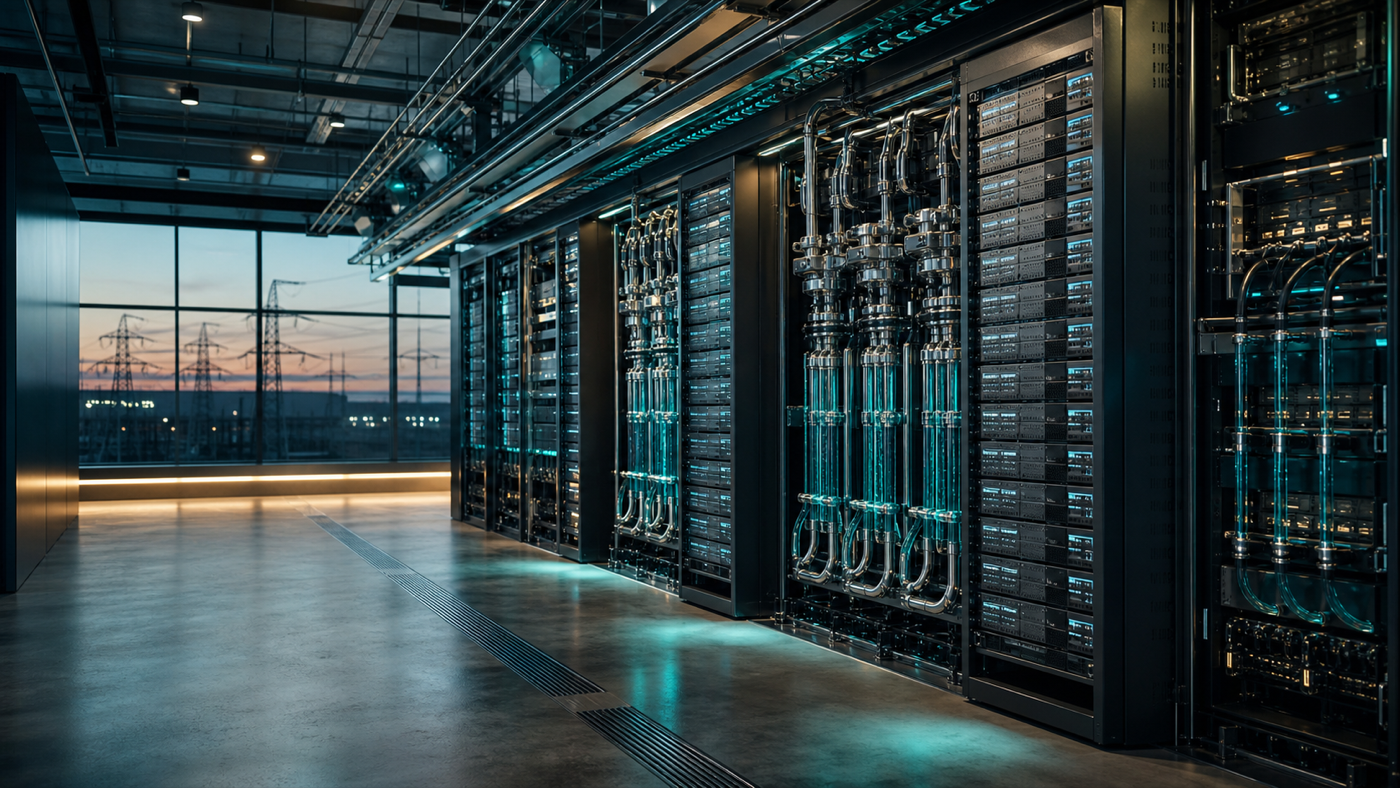
Modeling Liquid-Cooled Data Centers in EnergyPlus

Coupling facility water loops and chip junction temperatures in one solver helps trace where liquid cooling saves energy. The benefits of a warm-water design should be tested across climate, workload, and the boundary used to account for on-site water use.

arXivPreprint
Read the paper & insight

Computing & systems/ Related research

Democratizing LLM Training with the Edge: Challenges, Systems, and the Road Ahead

Distributed LLM training depends on communication, compression, and fault tolerance that can accommodate heterogeneous clients and unreliable links. Stable convergence across university sites motivates further testing with larger models and different privacy requirements.

arXivPreprint

READING NOTEStart with the research insight, then examine the methods, comparisons and conditions.

RESEARCH & PERSPECTIVES

Papers & insights

Leave each paper with a question worth pursuing.

28 papers

Cooling & thermal management

01

Modeling Liquid-Cooled Data Centers in EnergyPlus

arXivPreprint
Research insight

Coupling facility water loops and chip junction temperatures in one solver helps trace where liquid cooling saves energy. The benefits of a warm-water design should be tested across climate, workload, and the boundary used to account for on-site water use.

Abstract & detailed commentary

Yun-Dam Ko, Dipashreya A. Sur, Cade Napier, Carlos D. Díaz-Marín, Rishee K. Jain

Source abstract

As AI workloads accelerate data center transition toward high-density racks with direct-to-chip (DTC) liquid cooling, existing simulation tools remain limited in evaluating whole-building and multi-year efficiency. To bridge this gap, we develop a native EnergyPlus object, ElectricEquipment:ITE:LiquidCooled, that models DTC liquid cooling for chilled-water and warm-water architectures as plant-loop components. It couples facility-water loops, rack-side secondary loops, coolant distribution units, and chip-junction temperatures within a single solver. Validation against an independent Modelica implementation across 21 operating conditions, including two full-year runs compared at one-minute resolution, yields loop-temperature RMSE at or below 0.021 K, well within the 0.1 K acceptance threshold. Our case study demonstrates that warm-water liquid cooling reduces annual PUE from 1.43 to 1.25, eliminates on-site water use, and cuts total facility energy by 37.9% relative to an air-cooled baseline. By embedding liquid-cooling logic into EnergyPlus, our work provides whole-building, long-term energy modeling for high-density AI infrastructure within an open-source framework.

Original paperChinese poster

Compute–power coordination

02

Execution-Feasible Dispatch of LLM Pre-training Loads for Renewable-Dominant AI Data Centers

arXivPreprint
Research insight

Checkpointing creates grid flexibility only when waiting can be paired with executable parallel modes that recover the required training progress. Dispatch models should constrain their flexibility claims with throughput, memory capacity, and completion requirements.

Abstract & detailed commentary

Xi Tong, Ershun Du, Haiyang Jiang, Long Chen, Qin Wang

Source abstract

AI data centers (AIDCs) are emerging as large power-system loads, making their operational flexibility increasingly valuable. Existing studies often treat AIDC demand as continuously adjustable or generically delay-tolerant, which overstating the flexibility of large language model (LLM) pretraining. This paper proposes an execution-feasible dispatch framework for LLM pre-training in renewable-dominant AIDCs. LLM descriptors are first converted into checkpoint-domain daily workloads, then mapped to feasible 3D-parallel GPU modes with explicit throughput, GPU-capacity, memory, and IT-power limits. The resulting checkpoint- and mode-constrained load states are embedded into a day-ahead power dispatch model. Case studies on a 2048 GPUs AIDC with two LLaMA pretraining tasks show that checkpoint-aware 3D dispatch reduces operating cost by 20.02% and renewable curtailment from 1.077 to 0.014 MWh relative to fixed continuous training. Related results also show that checkpoint records alone do not create load flexibility,practical grid-interactive flexibility arises from checkpoint waiting combined with execution-feasible 3D-mode compensation.

Original paperChinese poster

Computing & systems

03

Democratizing LLM Training with the Edge: Challenges, Systems, and the Road Ahead

arXivPreprint
Research insight

Distributed LLM training depends on communication, compression, and fault tolerance that can accommodate heterogeneous clients and unreliable links. Stable convergence across university sites motivates further testing with larger models and different privacy requirements.

Abstract & detailed commentary

Ziyue Luo, Jiaxuan Cai, Cedric LeDenmat, Srijith Nair, Fatemeh Nourzad, Rohith Krishnan, Qinhang Wu, Jifan Zhang, Sungjae Lee, Zhe Li, Peiwen Qiu, Siddharth Shah, Rishabh Sharma, Sundararajan Srinivasan, Yinglun Xia, Xue Zheng, Zidong Liu, Bicheng Ying, Kaushik Chowdhury, Gauri Joshi, Yingbin Liang, Robert Nowak, Srinivasan Parthasarathy, Saurav Prakash, Balaraman Ravindran, Sanjay Shakkottai, Ness B. Shroff, Haibo Yang, Aylin Yener, Jia Liu

Source abstract

The growing computational power of modern GPU data centers has let a few industrial giants train and deploy large language models (LLMs) on massive amounts of data. Yet the sheer scale of these models and their training data makes centralized development increasingly hard to sustain, and at the same time shuts out smaller institutions that hold relevant private data but lack comparable infrastructure. In this paper, we organize our positions on distributed LLM training around the pretraining and fine-tuning paradigms, covering federated learning, split learning, and decentralized approaches, and we assess their readiness for geo-distributed settings with heterogeneous hardware and unreliable connectivity. We then present a {\em unified} system architecture built around a cloud-hosted parameter server that coordinates heterogeneous clients over outbound gRPC connections, reusing one communication, compression, and fault-tolerance stack for both pretraining and a family of fine-tuning methods. We validate the design with real geo-distributed experiments on GPT-2 Medium and Llama3-1B pretraining across multiple university sites, showing stable convergence under realistic conditions. Finally, we chart the road ahead, identifying open problems that span frontier model support, elastic fault tolerance, adaptive compression, federated alignment, privacy and trust, incentive design, and system--algorithm co-design, all of which must be addressed to make democratized LLM training a reality.

Original paperChinese poster

Compute–power coordination

04

Large-Scale Data Center Integration in Power Systems: Uncertainty and Multi-Scale Variation

arXivPreprint
Research insight

Workloads with similar peak power can impose different grid requirements because their power fluctuations occur at different frequencies. Interconnection studies should characterize both temporal variation and uncertainty in realized demand, while keeping observed workload signatures within the scope of the measured samples.

Abstract & detailed commentary

Le Xie, Dongjoo Kim, Qian Zhang, Grant Ruan, Paul L. Joskow

Source abstract

Hyperscale artificial intelligence (AI) data centers are emerging as a structurally new class of electricity demand. Unlike conventional loads, they materialize as spatially concentrated, transmission-level point loads with rapid deployment timelines and converter-dominated dynamics. Their integration is governed by two defining properties: forecast uncertainty in load realization and multi-scale temporal variation spanning sub-seconds to planning horizons. We develop a unified framework that links reliability and affordability to these dimensions through a four-quadrant structure: (reliability, affordability) $\times$ (uncertainty, variation), which integrates probabilistic resource adequacy, generation and transmission expansion, operational security, and market design. Measured traces from a public generative-AI workload dataset show strongly tonal GPU power spectra rather than smooth broadband behavior: harmonic combs at the training-step cadence, and a distinct sub-second periodicity in inference. Across these traces the dominant variance band shifts with workload type (seconds for training and offline inference; tens of seconds and longer for online inference). We report this as a characterization of the measured workloads rather than a universal signature, and take it to indicate that such loads warrant a spectral description rather than a peak-demand one. These signatures directly affect reserve requirements, ramping products, voltage stability, ride-through performance, and harmonic interactions in converter-rich grids. Taken together, the analytical framework and empirical results establish a system-level basis for assessing the reliability and cost implications of large AI data center integration across planning and operational horizons.

Original paperChinese poster

AI & modeling

05

Service-Aware Hosting Capacity Assessment of Edge Data Centers with Workload Flexibility

arXivPreprint
Research insight

The hosting capacity of an edge data center depends on which services can shift in time, a distinction peak demand alone may miss. Assessments should combine task deadlines, cooling overhead, and distribution network constraints.

Abstract & detailed commentary

Linhan Fang, Haoxiang Wan, Anurag Srivastava, Xingpeng Li

Source abstract

The growing demand for edge computing, content delivery, and AI services is driving the interconnection of edge data centers (DCs) with distribution networks. Before interconnection, utilities evaluate how much DC capacity can be accommodated without violating feeder current and voltage limits. Fixed peak load representations can overlook service dependent demand patterns, cooling related facility demand, and delay tolerant computing tasks. This paper develops a hosting capacity (HC) assessment model for edge DCs with shiftable workload scheduling. Three representative types are considered: mobile edge computing (MEC), content delivery network (CDN), and AI DCs. Facility demand is modeled by combining fixed base demand, service driven demand, prescribed cooling-overhead coefficient, and a shiftable workload component. Workload execution is optimized under arrival causality, maximum delay, daily energy balance constraints, and the resulting active and reactive loads are embedded in a distribution power flow model. Compared with the baseline without load shifting, the maximum bus level HC gain on the IEEE 33-bus system reaches 4.46% for MEC DCs and 9.89% for AI DCs, while CDN case shows negligible gain under the assumed cache management windows.

Original paperChinese poster

AI & modeling

06

Locked In: Multi-Objective RL for the AI Data Center Build-Out

arXivPreprint
Research insight

Siting, power procurement, and cooling commitments can lock in capital and resource use for years, so an initial site score cannot represent lifetime performance. Planning models should preserve irreversibility, retrofit timing, and the consequences of forecast error.

Abstract & detailed commentary

Satyapragnya Kar, Rajarshi Das, PR Panigrahi

Source abstract

AI data center build-out is a multi-trillion-dollar, multi-decade infrastructure program. Yet siting, power procurement, and cooling decisions are still made with static, single-point scoring tools. These tools are evaluated once, on day-zero numbers. This is a poor fit. A site's water, power, and carbon profile drifts substantially over the 10 to 20 year asset life. The governing decisions are also irreversible, and they bind capital and physical plant for years. We formalize long-horizon build-out as a tiered multi-objective Markov decision process. Strategic commitments are gated to discrete windows, incur switching costs, and energize only after source-dependent lead times. Operational dispatch is restricted to capacity that physically exists. We solve the problem with a preference-conditioned multi-objective agent that has a semi-Markov manager and worker hierarchy. The agent recovers a family of policies that a planner can steer across cost, carbon, water, and reliability at inference time. We validate long-horizon dynamics with a lightweight counterfactual rollout model. Across three commitment regimes (irreversible, reversible, and commit-once) on real site data, preference conditioning yields a confirmed, steerable trade-off on both objective pairs in every regime. Imposing lock-in produces a more evenly covered frontier and a far more consistent rate of anticipatory retrofit ahead of a binding water-stress constraint than a freely reversible formulation. Finally, a compact counterfactual dynamics model tracks slow-moving state well. It is measurably outperformed by simple persistence on the water-stress axis. We report this limitation rather than obscure it. We release the environment, agents, baselines, and evaluation harness. All of them are grounded in real interconnection-queue, water-stress, and grid-emissions data.

Original paperChinese poster

Resources & environment

07

Water as a Battery: Using Hydropower Flexibility to Support the Grid

arXivPreprint
Research insight

Hydropower dispatchability can change the preferred mix of wind, solar, and batteries, but the outcome depends on local resources and land availability. Data center energy planning should compare hourly supply availability and storage needs alongside those site conditions.

Abstract & detailed commentary

Chinmay Morankar, Abdullah Al Mehadi

Source abstract

This study presents a two-layer optimization framework to determine the optimal sizing of PV, wind, and battery storage co-located with existing hydroelectric plants to support rapidly increasing data center loads while minimizing cost, grid reliance, and transmission upgrades. The outer layer uses Particle Swarm Optimization (PSO) to select capacity combinations, while the inner layer performs rolling-horizon dispatch simulations to model hourly energy balance among PV, wind, hydro, and BESS, considering operational constraints. Two case studies were analyzed. At The Dalles Dam (Oregon), favorable wind resources and land availability enabled deployment of 111.2 MW PV and 117.9 MW wind, with no BESS required. Hydro flexibility allowed the system to meet the load with minimal grid support. In contrast, Conowingo Dam (Maryland) faced land constraints and limited renewables to 130 MW PV, leading to higher grid dependence. Co-locating hydro with renewables significantly enhances reliability and cost effectiveness by leveraging hydro's dispatchability to balance daily and seasonal variable generation from PV + Wind, reducing the need for storage or costly grid imports. This analysis provides a framework to meet the 99.9% availability targets of this new load type on the grid with sustainable energy resources.

Original paperChinese poster

Compute–power coordination

08

Comparative Analysis of Large Load Interconnection Requirements Across U.S. Transmission Entities

arXivPreprint
Research insight

Data centers' potential to support grid operation needs to be expressed through explicit, comparable interconnection requirements. Checking load models, fault ride-through, and dispatchability item by item can help turn a connection request into a demonstration of operating capability.

Abstract & detailed commentary

Rafi Zahedi, Rahul Anilkumar, Amin Zamani

Source abstract

The rapid growth of large loads, especially data centers driven by artificial intelligence, is creating unprecedented demands on the North American electric grid. Data centers now account for nearly 80% of large load interconnection requests in the Western Interconnection, and U.S. electricity consumption from data centers is projected to reach 325-580 TWh by 2028. Despite this urgency, technical interconnection requirements for large loads have not yet matured and still contain several gaps. This paper presents a comparative analysis of large load interconnection requirements across eleven U.S. entities, including AEP, Ameren, CAISO, Dominion, Duke Energy, ERCOT, LIPA, MISO, PJM, Southern Company, and SPP, under seven technical categories: large load definition, load data and modeling, fault ride-through, load curtailment and shedding, dispatchability, power quality, and reactive power control. The analysis reveals significant variation in both the scope and specificity of requirements. LIPA addresses all seven technical categories at least partially, while Dominion and Duke Energy provide detailed coverage across nearly all categories. The analysis also finds that data center applicants can be viewed as potential grid resources, rather than only as consumers. The findings provide a structured baseline from which utilities, regulators, ISOs/RTOs, and developers can identify gaps, benchmark against peers, and accelerate the development of interconnection standards.

Original paperChinese poster

Resources & environment

09

Generalized green and red concepts for artificial intelligence, big data, and information and communication technologies: Multidimensional framework and countermeasures

arXivPreprint
Research insight

AI sustainability impacts extend through electricity, water, materials, and the use of services; improving one efficiency metric does not establish a lifecycle benefit. A common system boundary is needed before comparing the resource costs of different technology choices.

Abstract & detailed commentary

Jinsong Wu, Yixin Xiao, Haowei Bi, Huamin Fang

Source abstract

The rapid expansions of artificial intelligence (AI), big data (BD), and information and communication technologies (ICT) are driving substantial growth in electricity, water, and material demands, with data centers projected to consume 6.7--12\% of U.S. electricity by 2028 (up from 4.4\% in 2023) and AI-related water demand estimated at 4--6 billion m$^3$ annually by 2027. Existing ``green AI'' and ``red AI'' discussions have largely emphasized computational efficiency and carbon emissions, providing limited guidance for lifecycle trade-offs, service-versus-use impacts, and broader sustainability externalities beyond energy. To bridge this gap, this paper proposes generalized green AI (GGAI) and generalized red AI (GRAI) and extends the taxonomy to red BD (RBD) and red ICT (RICT) as well as red electronic and electrical engineering (REEE) \& red digital technologies (RDT) under a unified Environmental-Economic-Social-Technical/Operational (E/Ec/S/T) framework. Based on representative footprint indicators in the large-model era (electricity, carbon, water, and e-waste), we analyze how risks propagate across AI-BD-ICT stacks and across service-use boundaries. We further organize actionable countermeasures into a four-tier taxonomy aligned with the Environmental-Economic-Social-Technical/Operational framework: metric-level reform for accountability, revision of information and communication technologies design principles and demand shaping, efficiency-oriented LLM development practices (data, model, training, and scaling), and energy-infrastructure transition. The proposed framework operationalizes the Environmental-Economic-Social-Technical/Operational-aligned assessment and intervention prioritization across the AI-BD-ICT stacks, enabling sustainability-by-design without sacrificing utility.

Original paperChinese poster

Resources & environment

10

Noise Emissions from Hyperscale AI Data Centers: A Poorly Characterized Exposure at the Doorstep of Community Health Research

arXivPreprint
Research insight

Noise readings collected at different locations and over different durations cannot be pooled directly into comparable community exposure estimates. Health research needs standardized spectral measurements that distinguish equipment sound power from noise at property boundaries and residential receptors.

Abstract & detailed commentary

Davide Bray, Francesca Dominici

Source abstract

The rapid build-out of hyperscale computing for artificial-intelligence workloads has made data-center noise a recurring source of community concern in the United States, yet calibrated, standards-grade acoustic data remain scarce. This narrative review synthesizes direct measurements, regulatory and legal records, investigative journalism, and relevant engineering literature to assess what is currently known and identify the measurements needed for credible health inference. Available sources report heterogeneous acoustic values at residences, property lines, and near-source positions, with individual readings from 39 to above 70 dB(A). Because location, metric, duration, instrumentation, and provenance differ, these values are not directly comparable community exposures, do not define a pooled distribution, and do not support an aggregate comparison with nighttime limits. Among cases with spectral detail, all but one reported continuous tonal noise associated with complaints, most often low-frequency content near 70-140 Hz, that A-weighted metrics alone may under-represent. Engineering evidence further suggests that cooling architecture may be a major determinant of facility sound emission; the cited 15-30 dB span is an equipment-level sound-power estimate, not a measured facility- or residential-receptor difference, and remains a hypothesis pending comparative field measurements. We propose a standards-based field-measurement and modeling protocol designed to generate frequency-resolved exposure data at named facilities. Such exposure characterization is a necessary foundation for credible assessment of community health effects and environmental justice implications.

Original paperChinese poster

Compute–power coordination

11

Virtual Transmission Lines from Data Center Workload Migration: Coordinated Multi-Year Transmission Expansion Planning

arXivPreprint
Research insight

Workload migration can relieve transmission congestion by changing where electricity is consumed and can complement physical line expansion. Its planning value remains constrained by bandwidth, latency, and workload balance, so it cannot be taken to eliminate the need for grid reinforcement.

Abstract & detailed commentary

Mengxin Zhu, Qian Kai, Yadong Liu, Yingjie Yan, Haoyu Zhao

Source abstract

The rapid growth of electricity demand from AI data centers is creating a dual mismatch in power systems: a temporal mismatch between fast-rising demand and slow transmission expansion, and a spatial mismatch between concentrated data-center loads and geographically dispersed renewable resources. These mismatches can exacerbate transmission congestion, resulting in unserved data-center load and renewable-energy curtailment. This study models geographic workload migration as a virtual transmission line (VTL) that changes nodal data-center demand without transferring physical electricity. A mixed-integer linear programming model is then developed to co-optimize multi-year candidate-line construction and workload migration, subject to construction delays, renewable-energy curtailment, unserved data-center load, workload-balance requirements, communication-bandwidth constraints, and link-latency limits. The model is evaluated over an eight-year planning horizon on a modified IEEE 14-bus system. The results show that coordinating VTL with physical transmission expansion reduces total system cost, unserved data-center load, and renewable-energy curtailment while alleviating transmission congestion. VTL-aware planning also requires one fewer candidate line than build-only planning. However, VTL alone cannot meet system demand and does not eliminate the need for physical transmission reinforcement. Sensitivity analysis indicates that VTL provides the greatest value when transfer capacity is tight, construction costs are high, load growth is rapid, and data-center flexibility is greater. Additional validation on the IEEE 118-bus system over a five-year planning horizon shows that coordinated planning retains its cost and reliability benefits while reducing physical expansion requirements.

Original paperChinese poster

Compute–power coordination

12

A Power-Trajectory Framework for Data Center Participation in Day-Ahead Markets

arXivPreprint
Research insight

Equal energy blocks can conceal different power trajectories, with consequences for generation ramping and settlement. Market design should align demand trajectories, generation constraints, and prices on the same time basis while separating representation errors from remaining supply-side compensation.

Abstract & detailed commentary

Menghan Zhang, Caisheng Wang

Source abstract

The rapid expansion of artificial intelligence (AI) is driving substantial growth in data center electricity demand. Interval-based energy blocks in day-ahead markets do not explicitly retain predictable intra-interval demand evolution, potentially creating mismatches with ramp-feasible generation trajectories and affecting settlement. This paper proposes a power-trajectory framework in which data centers declare predictable aggregate demand evolution through continuous demand-side power trajectories before market clearing. The declared trajectories are treated as exogenous inputs for constructing generation trajectories and the corresponding price trajectory. For feasible market-clearing outcomes, physical temporal consistency is established through continuous-time power balance and satisfaction of the modeled generation operating constraints, while economic temporal consistency is established by preserving the dispatch-price correspondence in energy settlement on a common temporal basis. Under the adopted settlement definitions, a trajectory-based settlement analysis separately quantifies the monetary magnitude of representation-induced power imbalances and the supply-side compensation that may remain under temporally consistent clearing and settlement. An illustrative 5-bus case demonstrates the elimination of representation-induced power imbalance and identifies the timing and physical sources of supply-side compensation. A modified IEEE RTS-GMLC case further illustrates these compensation effects across multiple generating units under workload-driven data center demand variations.

Original paperChinese poster

Compute–power coordination

13

Degradation Aware V2G Dispatch for Co-Optimization of Parking Facility and Edge Data Center Located in the Airport Campus

arXivPreprint
Research insight

Adding bidirectional chargers may reduce peaks further without increasing operator profit, because battery wear and payments to vehicle owners also affect the economics. V2G sizing should jointly assess peak-reduction value, owners' participation conditions, and the incremental cost of equipment.

Abstract & detailed commentary

Abdullah Al Mehadi, Hamed Haggi, Chinmay Morankar

Source abstract

This paper studies an airport campus where long stay EV parking, airport buildings, and an AI data center share a single grid connection. The campus pays a commercial electricity tariff that charges for both the energy used and the highest power drawn during peak hours. Parked EVs can send power back to the campus through vehicle to grid (V2G) chargers and lower this peak. This paper proposes a two stage method. In the first stage, a linear program schedules EV charging and discharging to maximize the operator's profit and also sets a fixed daily payment to EV owners. In the second stage, a search chooses the share of energy savings paid to owners. The model guarantees that every owner is paid enough to take part, pays for battery wear so that EVs discharge only when it is worth the wear, and assigns charging ports on a first come, first served basis. In the case study, 400 V2G chargers are added to 1200 existing Level 2 chargers, serving 5000 expected sessions under summer and winter rates. In a summer week, V2G raises operator profit by $4978 compared with smart charging and lowers the high peak demand by 4400 kW (9%). The best contract gives owners 70% of the energy savings and earns 21% more than a fixed payment alone. Doubling the V2G ports to 800 lowers the peak further but reduces profit, because owner payments grow faster than the savings. V2G pays back within 10 years if a bidirectional charger costs less than about $1800 more than a standard one. Compared with a 5 MW/10 MWh stationary battery, V2G cuts more peak demand at $409 of investment per kW instead of $1522 and needs no extra land, while the battery does not pay back within its lifetime.

Original paperChinese poster

Compute–power coordination

14

How suboptimal is my stochastic network controller allowed to be? Completion certificates with application to power grids hosting AI data centers

arXivPreprint
Research insight

Upper and lower cost bounds can provide a verifiable certificate of how far an implementable controller is from optimal. For grids hosting AI data centers, improvement may come from the spatial allocation and pricing of existing control authority as well as from adding hardware.

Abstract & detailed commentary

Michael Chertkov

Source abstract

Power grids are beginning to host AI data centers whose demand can change abruptly and in a correlated way, and operators and planners must decide whether existing controllers can absorb the resulting transients and where new flexibility is worth installing. We cast this as a question in stochastic control: how far from optimal is an implementable controller? For controlled diffusions with affine, state-independent actuation, additive and possibly degenerate noise and quadratic control cost, any Hamilton-Jacobi-Bellman (HJB) subsolution bounds the optimal cost from below and simulation bounds the deployed cost from above, so their gap certifies the permissible suboptimality. We construct subsolutions from path-integral control by completing the control geometry: enlarging the control Gramian until it matches the physical noise makes the problem linearly solvable, and its Feynman-Kac value is an automatic lower bound whose HJB residual is exactly the energy of the fictitious control. A dual noise-deflation construction can be tighter but requires a curvature condition. The geometry yields planning rules: price control authority in proportion to local noise variance, and use shadow values to guide sparse reinforcement. For nonlinear stochastic swing dynamics of the IEEE 118-bus system after a severe load loss, a simple generator controller is certified within 2.8% of optimal under homogeneous forcing; under heterogeneous forcing the gap is 39% with uniform prices and 1.2% once the same total authority is repriced, before any hardware is added.

Original paperChinese poster

Cooling & thermal management

15

AI-driven Thermal-aware Data Center Capacity Planning

arXivPreprint
Research insight

Fast thermal prediction makes it practical to compare workload placement and HVAC settings repeatedly during capacity planning. The value of this acceleration depends on checking prediction errors for previously unseen layouts, power combinations, and thermal conditions.

Abstract & detailed commentary

Yixing Li, Mark Fenton, Matthew Kaufeler, Ka Ming Leung, Xin Ai, Zhiyu Zeng

Source abstract

The emerging of large language models (LLMs) has posed significant challenges to the thermal management of data center. Intense GPU computation for LLMs results in localized hotspots. Moreover, spiking thermal loads during training and inference bursts make real-time cooling response more difficult to predict and control. Thermal-aware capacity planning of data center requires massive expensive high-fidelity CFD simulations. AI models can perform real-time prediction for unseen designs. However, existing works either have large prediction error, or have over-simplified assumptions for data center operations. This work presents an AI-driven framework that can perform thermal-aware capacity planning for a real-world data center in seconds. The embedded AI model learns from numerous key parameters (rack power, server power, server placement, HVAC settings etc.), and provides temperature prediction within milliseconds. This AI model is tested against high-fidelity CFD simulations, and results show that for unseen data center designs, model can achieve high accuracy with 10000X speedup. Driven by the AI model, the authors design the thermal-aware capacity planning framework. This framework can help data center designers and operators instantaneously optimize both workload distribution and HVAC cooling efficiency.

Original paperChinese poster

AI & modeling

16

Converter-Aware Coordination of Computing Flexibility in Behind-the-Meter Data Centers

arXivPreprint
Research insight

A task's ability to shift in time does not guarantee that its resulting power trajectory is electrically feasible. Workload schedules need joint checks against converter, voltage, and network limits before their flexibility can be assigned operational value.

Abstract & detailed commentary

Ruolan Cui, Ruizhang Yang, Chenxi Hu, Franxis Yunhe Hou

Source abstract

Data centers are emerging as large electricity consumers whose demand can be reshaped through workload scheduling. However, computing flexibility in behind-the-meter facilities does not automatically translate into electrically realizable power flexibility. Ignoring converter and network operating limits may cause converter overloads, protection trips, and interruptions to power supply and computing services. This paper proposes a converter-aware intraday scheduling methodology. First, a task-level mixed-integer linear formulation preserves synchronous training configurations and completion requirements, while Minkowski-sum aggregation and Shapley--Folkman convexification yield a linear inference-pool representation without unit-level binary variables. The latter admits a conditional relative relaxation-gap bound that decreases inversely with pool size. Second, a four-node electrical model links computing demand, on-site injections, and grid exchange to converter and network limits through lifted voltage variables and second-order cone relaxation. Finally, a mixed-integer model coordinates workloads, photovoltaic generation, energy storage, and grid purchases. Case studies show that electrical limits reshape scheduling and renewable utilization, while on-site resources reduce grid dependence. Under the studied conditions, fixed training cannot support full inference service within voltage limits, whereas coordinated scheduling achieves negligible inference shortage and passes verification against the original alternating-current model. These findings demonstrate the role of computing--electrical coordination in realizing the operational value of workload flexibility.

Original paperChinese poster

Compute–power coordination

17

On the Stability of Power Systems with AI Data Centers: A Multi-Equilibrium Switched DAE Framework

arXivPreprint
Research insight

Switching between GPU computation phases changes both the power system's equilibrium and the consistency conditions on its state. Stability assessment should examine switching sequences, dwell times, and stochastic transitions alongside steady-state behavior.

Abstract & detailed commentary

Vishal Shenoy, Damola Ajeyemi, Mahmoud Abdelgalil, Guido Cavraro, Emiliano Dall'Anese, Jorge I. Poveda

Source abstract

The rapid growth of Artificial Intelligence (AI) data centers is introducing dynamic loads into power transmission systems as GPU clusters switch between computational phases with distinct power demands. These dynamics are naturally modeled by switched affine differential-algebraic equations (DAEs), where each mode induces a different equilibrium and consistency space. We study their stability using control and hybrid systems tools. Differential projectors derived from the quasi-Weierstrass form yield an equivalent hybrid representation, from which we characterize the $ω$-limit set and establish Lyapunov conditions for practical stability with an explicit $\mathcal{KL}$ bound accounting for switching-induced resets. For stochastic inference workloads, we use Foster--Lyapunov techniques to establish probabilistic uniform global recurrence under mode-dependent dwell times and transition probabilities. The framework is validated on the IEEE 39-bus transmission network with co-located AI data centers using high-fidelity electromagnetic transient simulations of deterministic training and stochastic inference workloads.

Original paperChinese poster

Resources & environment

18

Estimating data center water use: Best practices and critical questions

arXivPreprint
Research insight

Differences in data center water-use estimates can arise from study design and system boundaries before they reflect differences between facilities. Comparisons should check data representativeness, hydropower assumptions, uncertainty treatment, and consistent terminology.

Abstract & detailed commentary

Eric Masanet

Source abstract

Concerns are growing about the water use of data centers. To quantify the scales, drivers, and possible trajectories of this water use, analytical estimation is required. However, current estimation methods and results vary widely due, in part, to a lack of established best practices. This variance is illustrated with a U.S. case study demonstrating a roughly 24-fold difference in possible outcomes based on observed U.S. study design variations. To address these challenges, this review synthesizes 14 best practices for advancing the science and utility of data center water use estimation. These proposed best practices can also be used as critical questions for stakeholders when evaluating the quality of any study. Using a structured rubric, it further assesses the literature to date (31 studies) against these best practices. The assessment reveals important opportunities for improvement and standardization in future study scopes, clarity, methods, and scientific knowledge building utility. It further finds that, while many studies provide reasonable transparency, scope definitions, replicability, and uncertainty treatment, many fall short in scientific justification, data representativeness, transparency on hydropower assumptions, terminological consistency, and meaningful discussions of limitations and future work. Recommendations are proposed for analysts, stakeholders, and policymakers to leverage these findings to help build a vibrant data center water use research community. Finally, this review can also be used as a basic primer for understanding data center cooling configurations and water use among analysts, policymakers, the media, and the public.

Original paperChinese poster

AI & modeling

19

Identifiability-Guided Composite Load Modeling of AI Data Centers

arXivPreprint
Research insight

An accurate fit to aggregate power can still hide errors in identifying the cooling branch. Load models for transient studies should make clear what branch measurements, protection rules, and reconnection assumptions allow to be identified.

Abstract & detailed commentary

Ding Lin, Jianhui Wang, Meng Yue, Tianqiao Zhao

Source abstract

The rapid growth of AI data centers introduces large, workload-dependent loads whose protection and reconnection behavior can affect power-system transient stability. Calibrating dynamic models of such loads is challenging because treating all associated elements as freely estimable may lead to weakly identified or physically confounded parameterizations. This paper proposes an identifiability-guided calibration framework for a composite load model with separate IT, cooling, and auxiliary branches. A nuisance-projected Fisher-information criterion characterizes the local identifiability of the cooling-motor composition, while a workload non-equivalence result shows that voltage-only recalibration cannot reproduce workload-dependent responses. Guided by these results, a grey-box estimator trained with branch-level supervision learns the workload-to-power relation and the cooling composition, while retaining a prescribed UPS protection law and an externally anchored reconnect-ramp duration. The learned workload relation is then distilled into a closed form for transient-stability simulation. Evaluation using 300,000 MIT Supercloud GPU power-utilization samples and 12,600 IEEE 39-bus fault scenarios yields an aggregate active-power $R^2$ of 0.948, compared with 0.856 for an LSTM baseline. Removing branch-level supervision preserves relatively high aggregate accuracy but substantially degrades cooling-component recovery. Under unseen deep voltage sags, the proposed model achieves a transient $R^2$ of 0.750, compared with 0.033 for the LSTM. Closed-loop simulations further show that cooling composition and protection behavior can affect retained-load states and voltage responses near protection thresholds.

Original paperChinese poster

AI & modeling

20

Watts If? A Benchmark for Counterfactual Reasoning About the AI Data Center Buildout

arXivPreprint
Research insight

Answering a siting question does not show that a model can enumerate every action still available at a decision point. Evaluations of LLM-assisted infrastructure planning should check action completeness, irreversible commitments, and counterfactual paths.

Abstract & detailed commentary

Pankaj Chouhan, Rajarshi Das, Aditya Dubey, Manminder Tomar, Sreekar Reddy, Samta Sharma, Satyapragnya Kar, PR Panigrahi

Source abstract

An AI data center is committed years before it draws a watt: a few discrete choices (grid or on-site gas, evaporative or dry cooling, which county to file in) fix its capital, water draw, and carbon path, and LLMs are now asked to help screen them with no test of whether they track what each commitment rules out. We introduce DCBench-440, with two arms reported separately: 200 generative questions over STRIPS worlds for five US deal archetypes, with search-verified gold answers and no tested shortcut above 12% on any question type, and 240 multiple-choice questions grounded in quoted site records, emission equations, and stated scenarios. Across open-weight deployments, accuracy spans 12.5-71.5% (generative) and 58.3-92.5% (multiple choice). One skill fails everywhere: asked to list every action available at a decision gate, no model exceeds 4.0% exact match. The strongest list 72-85% of the actions that would change the project's state but omit most permitted actions that change nothing; with those excused, the best exact match is still 24%. Code, data, and other materials are available upon request.

Original paperChinese poster

Computing & systems

21

Stackelberg Game with Multi-Agent Transformer for ISRS-Aware Resource Re-optimization in Multi-Band Optical Networks

arXivPreprint
Research insight

Changing one optical service can alter transmission conditions for others through nonlinear coupling. Resource re-optimization should jointly decide which services to adjust and how to reallocate their channels, with explicit checks on computational cost and the conditions under which benefits hold.

Abstract & detailed commentary

Jiaxin Liu, Rentao Gu, Miao Zhu, Zeguang Zou, Hui Li, Yuefeng Ji

Source abstract

The rapid expansion of generative AI is driving computing infrastructures toward interconnected AI data centers. Multi-band optical networks have become the backbone of such connectivity. To accommodate increasingly dynamic traffic demands, these networks require continual resource re-optimization to improve resource utilization and reduce service blocking. However, multi-band transmission amplifies inter-channel stimulated Raman scattering(ISRS), inducing nonlinear coupling among services. This coupling complicates re-optimization, as local adjustments perturb the global power profile, creating interdependent optimization decisions across services. Moreover, the nonlinear interactions vary with the subset of services selected for re-optimization, and inappropriate selection may reduce re-optimization effectiveness or diminish achievable benefits. To address these challenges, we propose a Stackelberg Game with Multi-Agent Transformer (SG-MAT) approach for ISRS-aware resource re-optimization. SG-MAT employs a leader-follower structure, in which the MAT-based follower models nonlinear coupling and generates coordinated channel reallocations, feeding the utilization improvements to the leader. Using this feedback, the leader identifies critical service subsets, approximating a Stackelberg equilibrium to guide global decisions and enabling consistent and efficient re-optimization. Simulation results show that SG-MAT achieves the highest utilization improvement and reduces the blocking ratio by approximately 30% under moderate traffic loads, with computational complexity comparable to benchmarks.

Original paperChinese poster

Computing & systems

22

Capturing Electrical Windows Through Reconfigurable Optical Networks: Transfer-aware Scheduling of Multi-Region AI Data Centers

arXivPreprint
Research insight

A low-price or renewable-rich period becomes a usable migration window only if the checkpoint arrives in time for training to resume. Cross-region scheduling should verify feasibility against transfer delays, shared-link capacity, and optical network reconfiguration.

Abstract & detailed commentary

Xi Tong, Zijian Li, Xiaoyi Fan, Cong Zhang, Ershun Du, Qin Wang

Source abstract

Artificial-intelligence data centers (AIDCs) can provide spatiotemporal load flexibility by migrating training workloads in response to regional electricity prices and renewable-energy (RE) availability. However, transfer-blind scheduling may overestimate migration benefits by overlooking transfer time or prevent training from resuming within renewable-rich or low-price windows when considering transfer time. This paper proposes a transfer-aware compute-electricity-network scheduling framework that coordinates training placement, checkpoint transmission, and optical circuit switching (OCS) to improve local RE utilization and reduce grid-purchase cost. A compact compute-electricity master problem generates candidate schedules using estimated transfer delays. The framework then schedules optical circuits, verifies checkpoint delivery under shared-link capacity constraints, and revises infeasible schedules using updated delay estimates. It integrates day-ahead planning, event-triggered intraday updates, and real-time dispatch. In a five-AIDC benchmark with equal completed work and network resources, the proposed method reduces the real-time grid purchase cost by 12.50% and increases the local RE utilization by 2.724 percentage points relative to static optical operation. Sensitivity and ablation analyses indicate that OCS is particularly beneficial when renewable-rich or low-price windows shift across sites and network bottlenecks hinder timely checkpoint delivery.

Original paperChinese poster

Compute–power coordination

23

Unlocking AI Data Center Interconnection Capacity Through Coordinated Grid and Data Center Flexibility

arXivPreprint
Research insight

In the studied feeder, interconnection capacity is driven more by network topology and connection location than by workload flexibility alone. Before investing in workload scheduling or UPS flexibility, compare the available gains against grid reconfiguration, voltage constraints, and reserve requirements.

Abstract & detailed commentary

Rida Fatima, Xingpeng Li

Source abstract

The rapid growth of AI data centers is creating concentrated electricity demands that can exceed available distribution network headroom and delay interconnection. This paper investigates whether capacity can be used effectively by coordinating flexibility on both sides of the interconnection. A day-ahead mixed integer second order cone programming framework maximizes feasible AI data center IT capacity using utility side conservation voltage reduction and network topology reconfiguration, together with data center workload shifting and reserve constrained uninterruptible power supply storage. Background feeder demand uses voltage dependent ZIP models, while the data center is modeled as constant power demand using Training, Inference, and Mixed workload profiles. A two-stage solution first maximizes interconnection capacity and then minimizes feeder losses for the retained capacity, with numerical relaxation screening. Studies on a 116-bus model derived from the IEEE 123-node feeder show that, at the constrained bus-60 connection point, grid side flexibility, driven almost entirely by network reconfiguration, increases feasible IT capacity by approximately 42.5-45.0%, while data center flexibility alone provides approximately 2.1-5.4% gains. Coordinated operation increases feasible IT capacity from approximately 10.5-10.6 MW under BASE operation to 15.3-16.0 MW, corresponding to gains of approximately 45.9-50.8%; the 16.0 MW Inference result is limited by the adopted UPS reserve requirement. Benefits are strongly location dependent and influenced by workload flexibility, deferral duration, PUE, UPS energy and reserve requirements, and feeder loading. Under a combined adverse operating condition, FULL capacity decreases by only 3.4% relative to the nominal Mixed case while retaining substantial additional capacity over BASE.

Original paperChinese poster

AI & modeling

24

Trajectory Sensitivity-Based Dynamic Assessment of an AI Data Center Under Contingencies

arXivPreprint
Research insight

Trajectory sensitivities can quickly identify influential parameters, but their predictions describe local changes around a given disturbance trajectory. Operational use should specify the disturbance and parameter ranges and check the estimates against nonlinear simulation.

Abstract & detailed commentary

Arnav Bagga, Saskia A. Putri, Abhishek Banerjee, Xiaofan Wu

Source abstract

Artificial Intelligence (AI) data centers are emerging as converter-dominated, parameter-rich electrical systems whose dynamic response depends on fast workload-driven demand variations, tightly regulated data-hall converters, and coordinated on-site sources. Assessing such systems by repeatedly solving nonlinear time-domain models for every outage, load realization, and parameter perturbation is computationally expensive and provides limited insight into response sensitivity. This paper presents a trajectory sensitivity (TS)-based dynamic assessment framework for a self-contained AI data center supplied by a 2 kV DC microgrid with a grid-tied interface. The model includes time-varying data-hall load profiles, a voltage source converter (VSC), battery energy storage systems (BESS) units, supercapacitors, and synchronous-generation-side sources. For each disturbance, firstly, TS are computed along the nonlinear disturbance trajectory, capturing the local effect of source trips, data-hall outages, converter controls, and load ramps. Later, the computed TS data is used to estimate system trajectories under simultaneous parameter perturbations. Validation against full nonlinear ODE simulations with $\pm 15\%$ perturbations shows close agreement. In addition, the TS-based approach reduces computational time of dynamic-response evaluations from seconds to milliseconds, demonstrating its potential as a scalable screening tool for AI data center dynamics.

Original paperChinese poster

Compute–power coordination

25

A Critical Review of Grid Integration Challenges and Flexibility Opportunities for Large-Scale Data Centers

arXivPreprint
Research insight

Reliable data center interconnection requires hourly supply, network deliverability, and verified controllability to be assessed together. Claims about marginal emissions, water use, or backup obligations should also state which conclusions the load model and validation data can support.

Abstract & detailed commentary

Bibek Dhakal, Manohar Chamana, Biswambhar Gayen, Jatendar Kumar, S M Shams Rahman, Aaqib Peerzada, Ki Yeob Lee, Olatunji M. Adeyanju, Bhaskar Mitra, Soumya Kundu, Stephen Bayne

Source abstract

The rapid proliferation of cloud computing and artificial intelligence workloads is fundamentally reshaping the magnitude, spatial concentration, and electrical characteristics of data center power demand. Data centers differ from conventional commercial loads because they combine high rack densities, converter-dominated interfaces, thermally coupled cooling, uninterruptible power supplies, programmable workloads, and increasingly complex behind-the-meter generation and storage within a single facility. This review examines their grid integration from utility and sustainable-energy perspectives across resource planning, large-load interconnection, distribution feeders, market operation, real-time dynamics, power quality, and asset management. Particular attention is given to distribution-level issues that receive limited treatment in broader energy reviews: bidirectional operation on renewable-rich feeders, harmonic propagation and resonance, ride-through and reconnection, transformer derating, cable ampacity, neutral-conductor heating, protection, and measurement. Static, composite, physics-based dynamic, calibrated, impedance, electromagnetic transient, and hybrid load models are compared according to study purpose and data requirements, and utility coordination platforms, uninterruptible power supply and battery control, workload flexibility, renewable co-location, cogeneration, fuel cells, thermal storage, and clean firm supply are assessed. The central finding is that requested peak demand and annual energy matching alone cannot establish reliable or sustainable integration. Credible assessment must consider hourly and locational supply, network deliverability, marginal emissions, lifecycle and water impacts, backup obligations, rebound, asset health, and verified operating capability.

Original paperChinese poster

Computing & systems

26

FALCON: FPGA-Accelerated Latency-Certifiable Occupancy Networks for Camera-Based Autonomous Driving

arXivPreprint
Research insight

Safety-critical computing needs an explicit account of worst-case delivery time and the output returned when a deadline is missed. Cycle bounds, measured latency envelopes, and full-pipeline performance should be reported separately so that guarantees from proxy tests remain within their tested scope.

Abstract & detailed commentary

Haohua Que, Mingkai Liu, Handong Yao

Source abstract

A perception system that must brake for a pedestrian does not need a low average latency. It must deliver an answer before the deadline on every frame, the worst case included. Commodity edge accelerators optimize the mean through dynamic scheduling, OS jitter, thermal throttling, and contention, so their per-frame latency can be measured but not bounded. We build FALCON, a camera-based 3D occupancy front-end on the AMD Kria KR260, an embedded FPGA drawing 4.3 W idle and up to 6.6 W under inference, and make the latency guarantee layered and explicit: programmable-logic (PL) compute is cycle-bounded analytically; inference is a measured envelope over 100k-frame traces; and a watchdog enforces output delivery, publishing the previous output flagged stale when a frame is late. The deadline runs use a fixed-work proxy of six ResNet-50 DPU inferences per frame, not the full occupancy network: across three 100k-frame enforced runs, all 300k proxy frames delivered an output within the 100 ms deadline plus at most 10.2 ms, the worst of the three runs. The full six-camera FlashOcc pipeline composes to about 1.3 s per frame on the board and is not yet a 10 Hz system. The two operations the DPU cannot run, a view-transform gather and a bilinear resize, become fixed-trip-count PL IPs numerically matched to their software references. On the full Occ3D-nuScenes validation set the board reaches mIoU 29.88, 92.8% of an FP32 baseline the DPU cannot run. On a ResNet-50 probe over 100k frames the KR260 tail stays within 1.5 times its median (2.0 times for the six-inference proxy), where Jetson Orin reaches 4.4 times and the worst datacenter GPU run (NVIDIA L4) 23.6 times. The deployment recipe, HLS sources, and raw timing traces are released.

Original paperChinese poster

Compute–power coordination

27

Impact of Data Center Load on Co-Optimized Generation and Transmission Expansion Planning with Embedded Unit Commitment

arXivPreprint
Research insight

In the reported planning case, a large added load shifts the preferred investment from transmission reinforcement to generation, with operating costs dominating long-term expenditure. Planning comparisons should jointly examine load siting, unit commitment, and regional supply conditions before applying that result elsewhere.

Abstract & detailed commentary

Haoxiang Wan, Xingpeng Li, Jonghwan Kwon

Source abstract

The rapid growth of hyperscale data centers challenges grid expansion planning, yet existing studies focus largely on operational flexibility rather than long-term investment decisions. This paper examines how large data center loads sited at multiple buses affect co-optimized Transmission Expansion Planning (TEP) and Generation Expansion Planning (GEP). The problem is formulated as a multi-year, Unit Commitment (UC)-embedded mixed-integer linear program on the modified IEEE 24-bus Reliability Test System (RTS-24) with Electric Reliability Council of Texas (ERCOT)-calibrated renewable energy profiles. A 500 MW data center load, about 17.5% of the base-year peak, is allocated across four buses by voltage level, generation headroom, renewable co-location, and network connectivity. Integrating this load raises the 15-year net present value of total system cost by 1,794 million USD (+61.6%) and the system-average locational marginal price (LMP) by 45.2%, with operating cost dominating capital investment (84.2% versus 15.8%). Renewable curtailment remains negligible: existing renewables are already near full utilization, so the added demand is served almost entirely by incremental thermal generation. Most notably, the load shifts the optimal plan from transmission-only to generation-only, replacing the base-case 230 kV reinforcement with a new 400 MW combined-cycle gas turbine and showing that strategically sited generation can substitute for network reinforcement.

Original paperChinese poster

Compute–power coordination

28

AI Data Centers Meet Electrical Grids: A Review of Power Challenges and Coordinated Solutions

arXivPreprint
Research insight

Reducing energy per token does not by itself establish lower peak demand, fewer electrical disturbances, or lower carbon emissions. Mitigation should match each disturbance's timescale to the response capabilities of chips, racks, storage, and grid resources.

Abstract & detailed commentary

Mariam Mughees, Yuzhuo Li, Yize Chen, Yunwei Ryan Li

Source abstract

Artificial intelligence (AI) workloads are creating large, power-electronic loads whose effects on power systems depend on location, temporal variability, controllability, and interactions with other loads and resources. Annual electricity consumption alone cannot capture these effects. This review examines how AI data centers affect power systems stability, renewable-energy integration, and low-carbon planning by tracing the power-delivery chain from accelerators and workloads through rack converters, uninterruptible power supplies (UPS), storage, and microgrids to the transmission point of interconnection. Reported oscillatory events and multi-gigawatt load transfers highlight how facility responses can amplify disturbances, while programmable workloads and controllable power converters offer opportunities for demand flexibility. Challenges and mitigation strategies are organized across device, rack, facility, and power systems levels, spanning millisecond-to-year timescales. A bandwidth-matching framework relates disturbances to the response capabilities of mitigation resources. The review distinguishes computational energy efficiency from power systems and sustainability outcomes: lower energy consumption per token does not necessarily reduce peak demand, electrical disturbances, or carbon emissions. It examines how coordinated workload scheduling, grid-interactive UPS systems, storage, high-voltage DC distribution, and flexible interconnection can support reliability, efficiency, and decarbonization. Key research needs include dynamic load models, high-bandwidth telemetry, carbon-and grid-aware scheduling, and mechanisms for valuing flexible computational demand.

Original paperChinese poster